Inspection is a decision per line, not per delivery. Six enclosures can be fine while the hinge sets in the same box are not, and recording that honestly is what makes the supplier's score mean something later.
Inspecting needs inspect_iqc_receipt. Raising a non-conformity from a rejected line needs raise_nc_from_iqc.
Working through the lines
Each line takes one of four results. Accepted and rejected are obvious; concession is the one worth understanding - the material does not conform, and you are taking it anyway, deliberately and on the record.
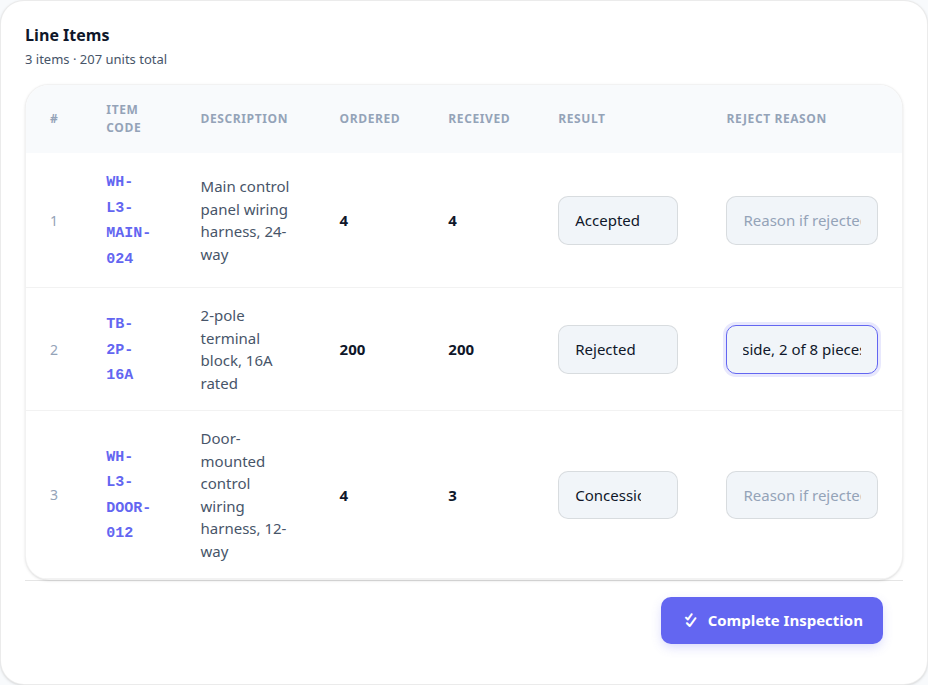
Accepted - conforms, goes to the floor.
Concession - does not conform, accepted anyway with the deviation written down and signed off.
Rejected - does not conform and is not being used.
The receipt's own status follows: all accepted, all rejected, or partial when the lines disagree.
Concession is a decision somebody owns, not a way to keep a line moving. If the same deviation is conceded three deliveries running, it is a specification problem, not a supplier one.
What a finished receipt shows
The finished record is the evidence: what arrived, what was decided, why, and what came of it. A rejected line can raise a non-conformity, which carries the supplier, the project and the line itself into the NC without retyping any of it.
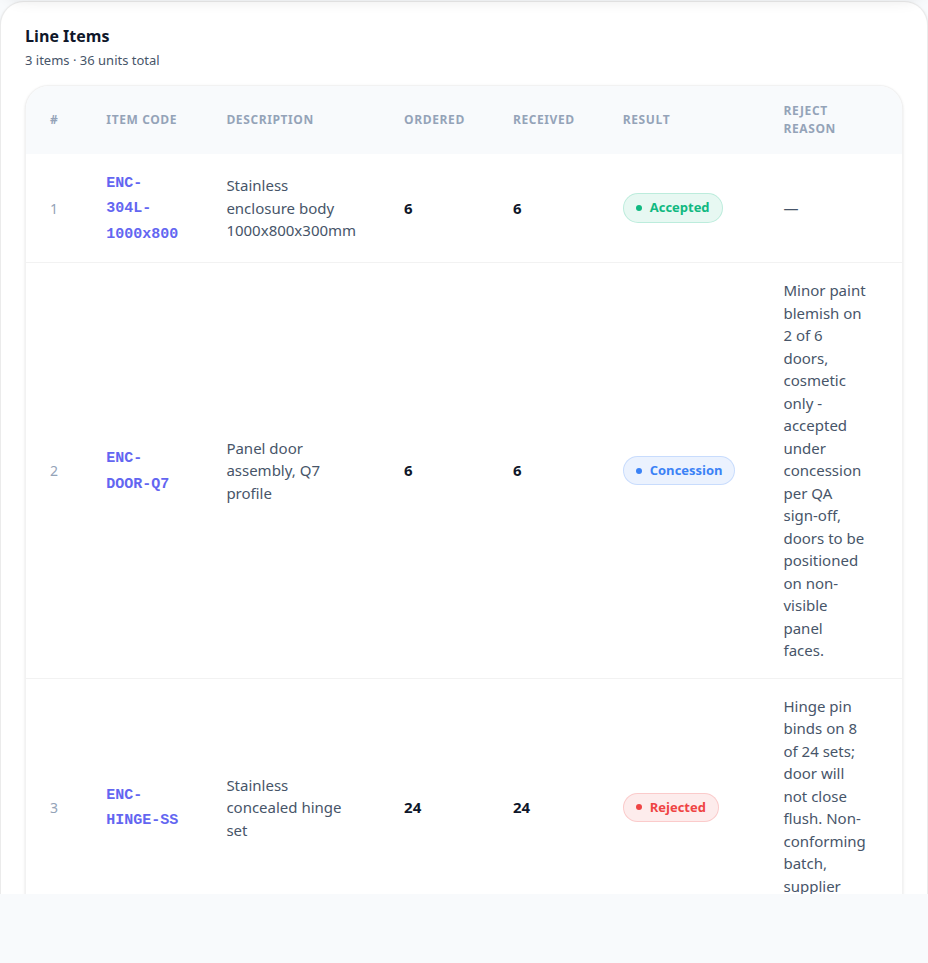
A rejection that feeds a non-conformity is how incoming quality control reaches the rest of the system: the supplier's score, the CAPA if it repeats, and the audit trail.