Opening a project takes a minute. Running one is the part that matters: the team that can see it, the money it is consuming, and the non-conformities, handovers and incoming inspections that accumulate against it while the job runs.
Managing the team needs manage_project_members. Recording spend needs manage_project_budget, and seeing the figures at all needs read_project_budget.
The team
Membership is per project and it is what grants access: adding somebody to a project is how they come to see it at all. The label beside a name describes their relationship to this project - whether they are its manager or a member of it - not their job title elsewhere in the company.
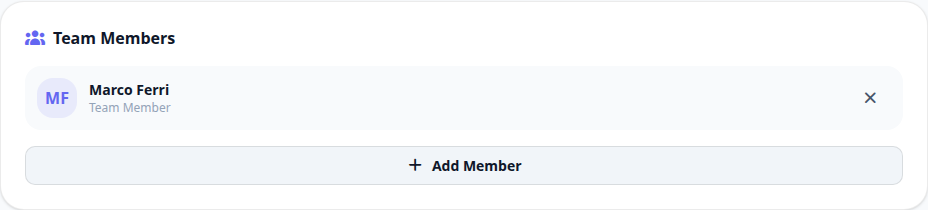
Add people when they start on the job, not when they ask why they cannot see it.
The project manager and the team are different things: one answers for the project, the others work on it.
A project with no members but a manager is normal on a small job - it is not an error state.
The budget
A budget is a number you set once and a list of what has actually been spent against it. Each entry carries its own date and the person who recorded it, so an overrun can be read backwards rather than argued about.
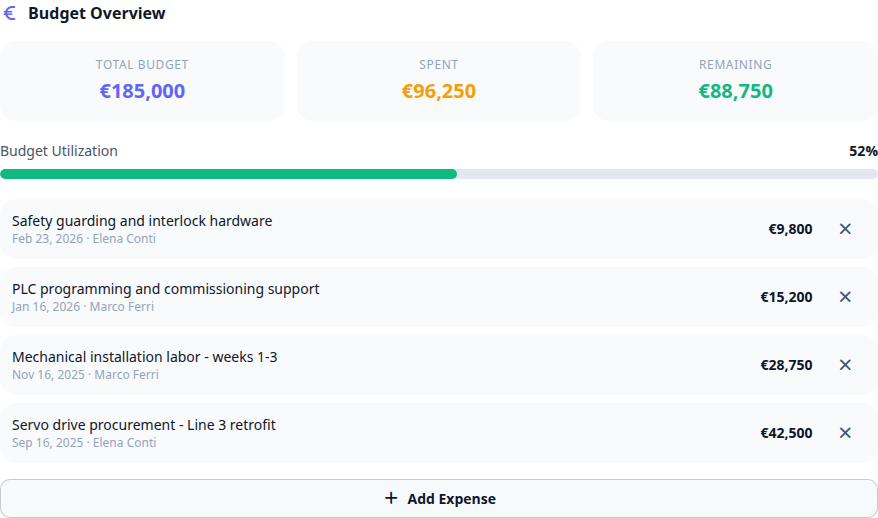
Record spend as it is committed, not when the invoice arrives. A budget that only updates at month end tells you about last month.
What else lands here
The project page is where the rest of the quality system converges. Anything raised against this job appears on it, which is what makes the project the right place to answer "what happened on this one?".
Non-conformities raised on the job, whoever reported them.
Handovers between departments, with the checklist that travelled with each.
Incoming inspections for material bought for this project, including anything rejected.
Put a job on hold rather than deleting it: on hold keeps the history and the links, deletion loses both.