An analysis moves through four states: draft while you are building it, in review while someone checks it, published once it is the year's authoritative record, and archived when the year is over. The chain exists so that "this is what we knew then" is a fact rather than a memory.
Submitting and publishing need publish_context_analysis. Archiving needs archive_context_analysis.
Moving the year along
Each step is a deliberate action with a confirmation, taken from the year view. Nothing advances on a schedule - a year sits where you left it until someone moves it.
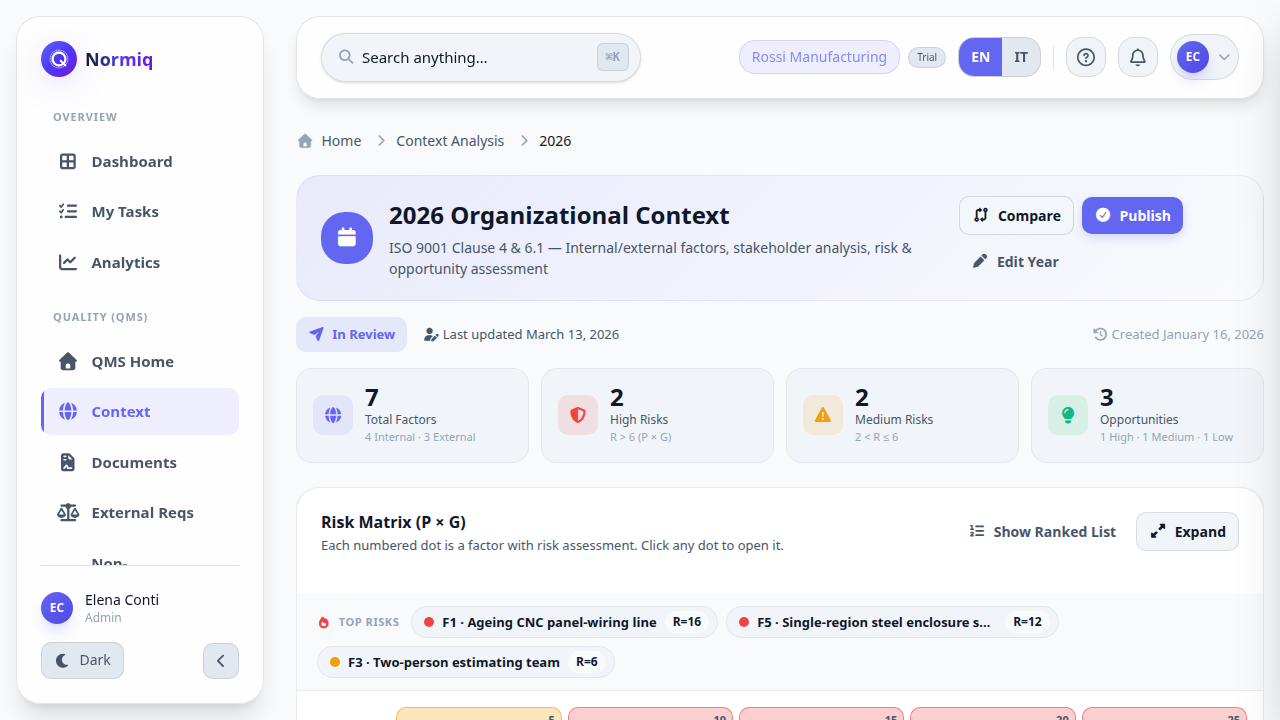
Finish the factors and their assessments while the analysis is a draft.
Submit it for review when the content is complete.
Publish it once it has been checked - it becomes the authoritative record for that year.
Archive it when the period closes. It stays readable, and the next year starts fresh.
Comparing years
The comparison is the part an auditor asks about: not what your context is, but how it changed and what you did about the change.
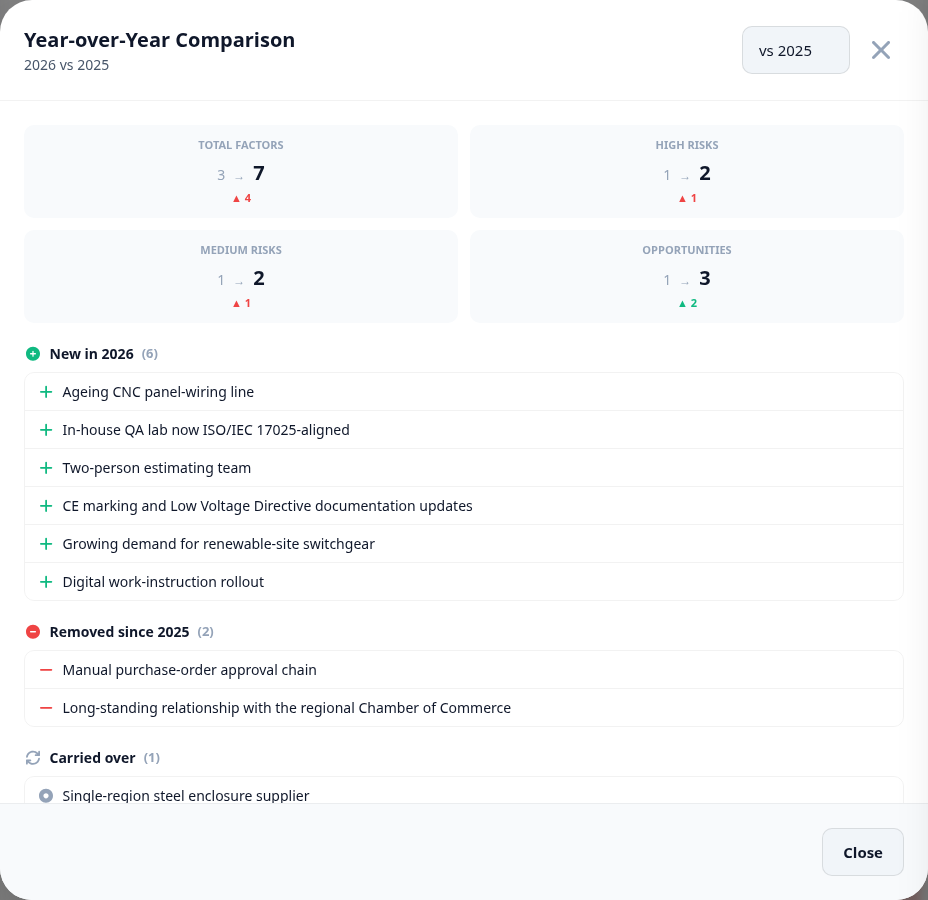
A factor carried over with the same score for three years is either stable or unexamined.
A factor that disappeared without a note is the one you will be asked about.
Rising totals are not automatically bad - a year that found more is a year that looked harder.